Key Takeaways
- Powder mixing consistency directly impacts product quality, compliance, and batch reliability.
- Traditional mixing methods often cause segregation, degradation, and uneven blending.
- Double cone blenders ensure gentle, uniform mixing without damaging sensitive materials.
- The design eliminates dead zones and supports consistent results across various industries.
- Choosing the right Double Cone Blender manufacturer in India ensures efficient, reliable, and scalable mixing performance.
In industries where powder mixing directly impacts product quality—think pharmaceuticals, nutraceuticals, or food processing—there’s very little room for inconsistency. Uneven blending can lead to batch rejection, compliance issues, or worse, compromised end products. That’s exactly where a Double Cone Blender manufacturer in India becomes relevant—not just as a supplier, but as a process partner.
The challenge most labs and production units face isn’t mixing itself. It’s achieving uniformity without damaging sensitive materials. Traditional mixers often apply excessive force, leading to degradation or segregation. A well-designed double cone blender changes that dynamic entirely.
Why Powder Mixing Still Fails in Many Setups
many facilities still struggle with blending efficiency, even after investing in modern equipment. The issues are predictable:
- Particle segregation due to density differences
- Over-mixing leading to product degradation
- Dead zones inside poorly designed vessels
- Manual errors during loading and discharge
What’s worse? These problems don’t always show up immediately. They surface during quality checks—or worse, after production.
A Double Cone Blender manufacturer in india addresses these problems at a design level rather than trying to fix them operationally.
How a Double Cone Blender Actually Works
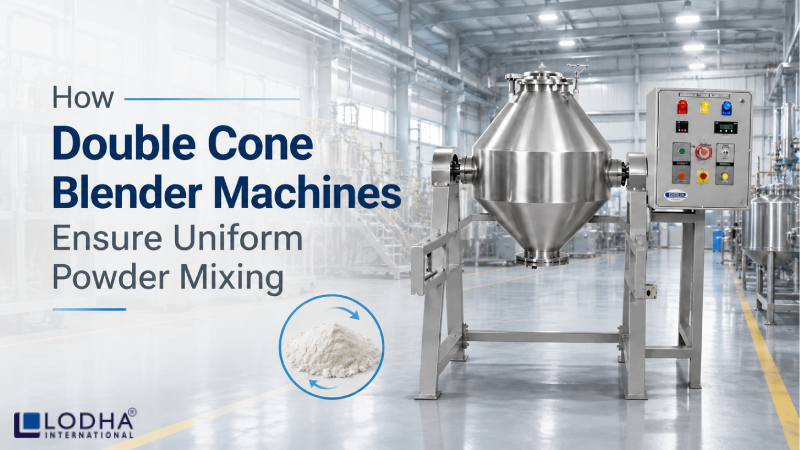
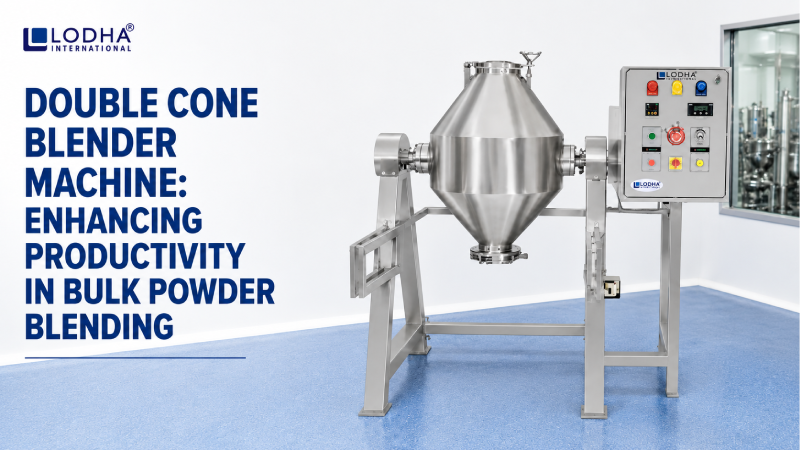
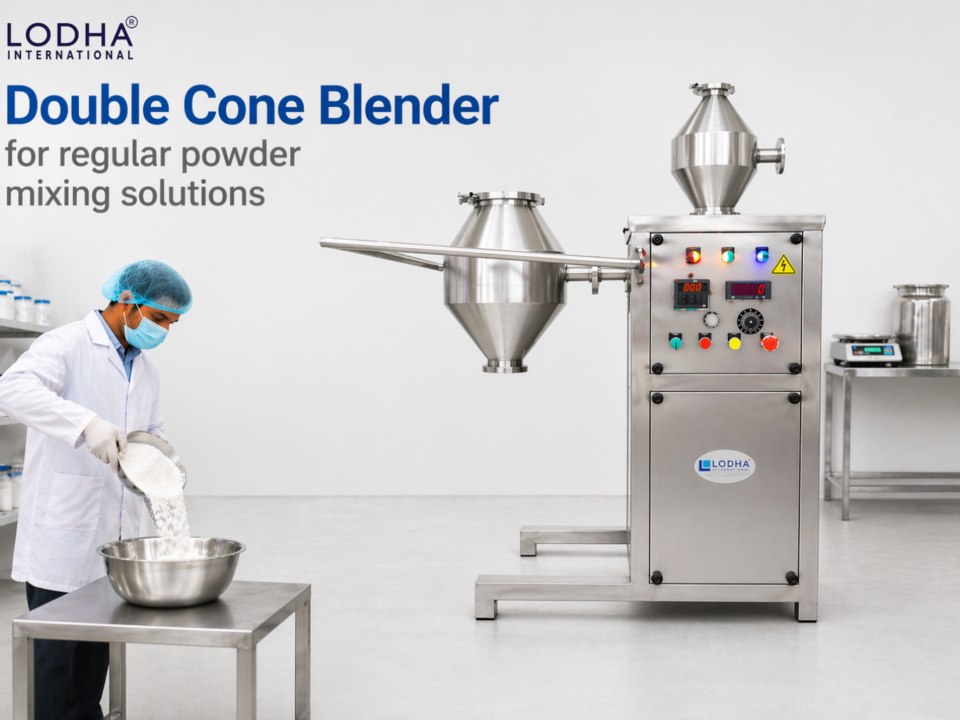
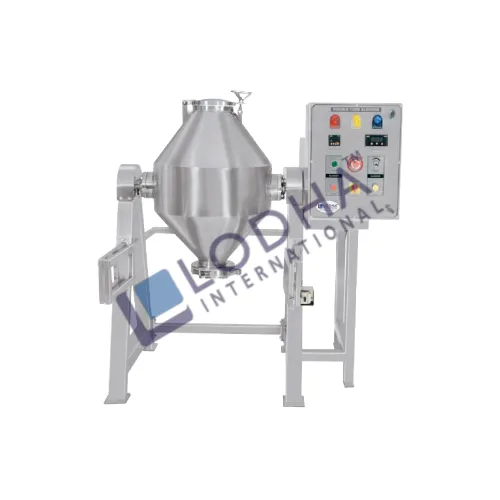
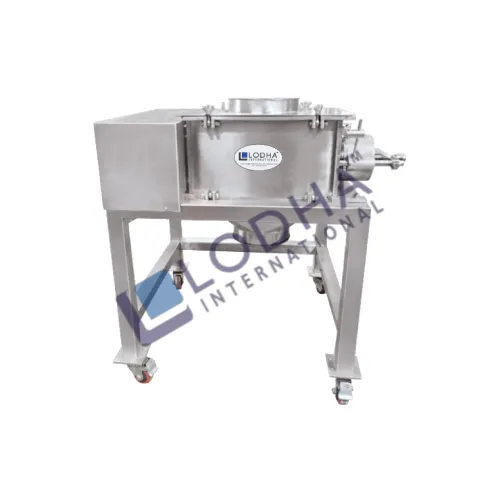
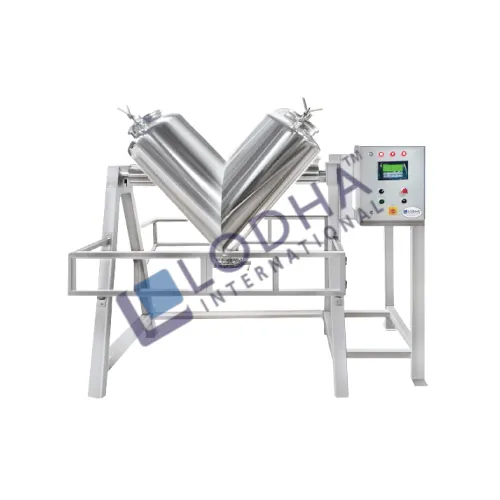
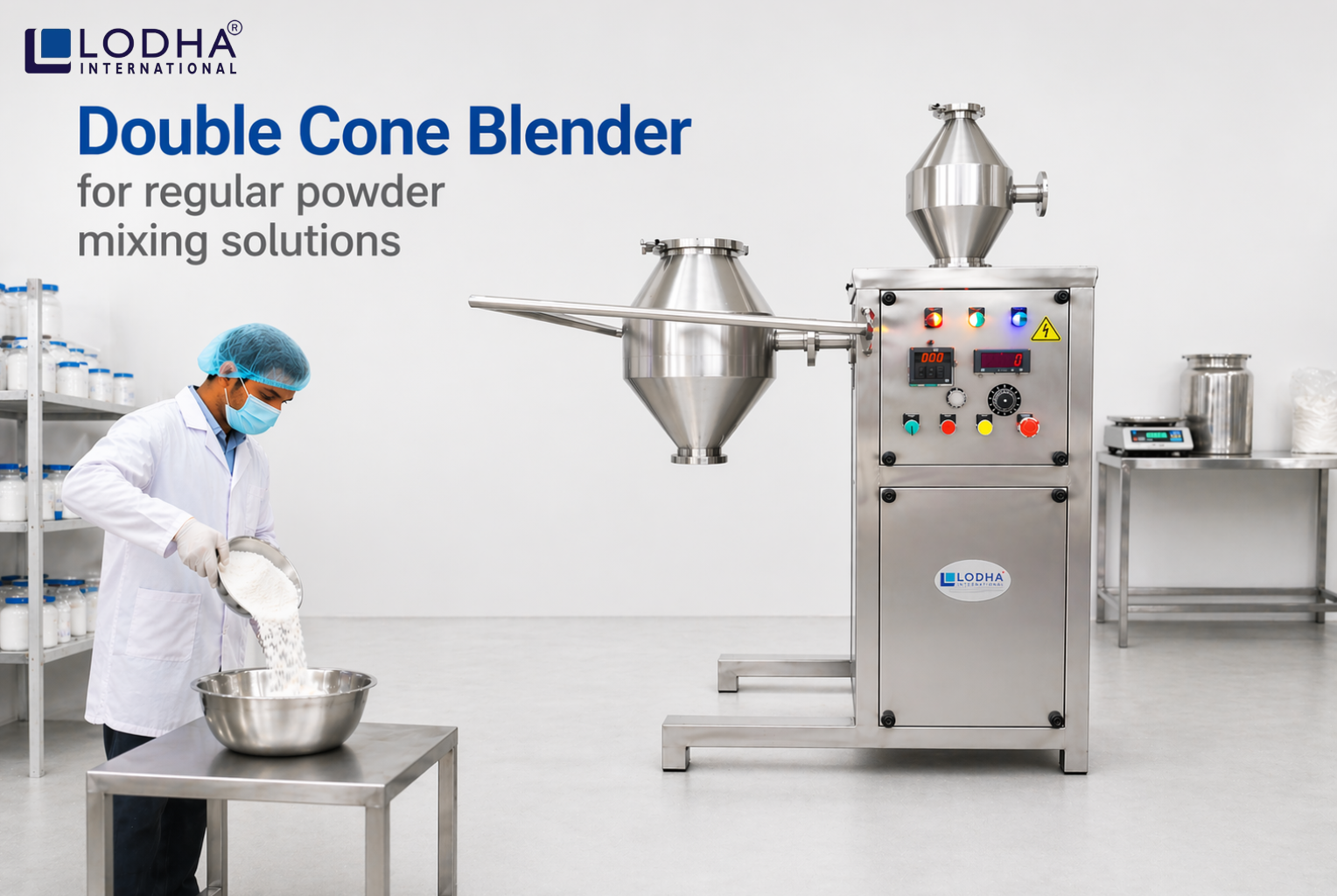
At first glance, the design looks simple—two conical ends connected by a central cylindrical section. But the real intelligence lies in how the material behaves inside.
As the vessel rotates on a horizontal axis, the powder continuously cascades from one side to the other. This creates a diffusion-based mixing process rather than aggressive mechanical blending.
Here’s what that means in practice:
- Particles spread across newly exposed surfaces
- No forced agitation or high shear stress
- Gentle yet thorough mixing
It is therefore perfect for materials that are brittle, heat-sensitive, or abrasive.
Where This Blender Fits Best (Real Use Cases)
This isn’t a one-size-fits-all machine—and that’s a good thing. Its real strength shows up in specific applications.
- Pharmaceutical & R&D Labs
When working with active ingredients or trial formulations, even minor inconsistencies can derail results. The diffusion mixing method maintains ingredient integrity while delivering uniform blends.
- Nutraceutical & Herbal Processing
Natural ingredients often vary in density and texture. The gentle tumbling action avoids separation and maintains product consistency.
- Food & Beverage Industry
From spice blends to powdered beverages, the need is simple: uniform taste and texture. This blender handles it without altering flavour profiles.
- Cosmetic Powder Mixing
In cosmetics, texture matters. Whether it’s face powders or base formulations, the process keeps particles intact and evenly distributed.
Important Features That Really Count (Not Just Specifications)
Let’s skip the marketing fluff and focus on what genuinely impacts performance.
- PLC-Controlled Automation
Full automation for loading and discharge reduces operator dependency. It also improves batch consistency—something manual systems often struggle with.
- Conical Geometry for Uniform Mixing
The dual-cone design eliminates dead zones. Every particle gets movement, which leads to better blending outcomes.
- Adjustable Speed via VFD
Different materials behave differently. Being able to control rotation speed gives you flexibility without changing equipment.
- Maintenance-Friendly Drive System
The shaft-mounted gear motor removes the need for complex gear assemblies. Less downtime, fewer mechanical issues.
- Safety Interlocks & PLC Programming
Operational safety isn’t optional—especially in lab and pharma environments. Built-in interlocks prevent accidental operation errors.
How to Evaluate the Right Blender for Your Application
If you’re serious about getting this right, here’s what you should be asking:
- Does the design support complete discharge without residue?
- Can the system handle fragile or abrasive materials?
- How easy is it to clean and maintain?
- Is automation aligned with your process requirements?
- Can the speed be adjusted based on product type?
These aren’t technical questions—they’re business-critical ones.
Why Choose Us
At Lodha International LLP, we don’t just supply equipment—we understand how blending impacts your entire production chain. From managing abrasive industrial materials to handling delicate pharmaceutical powders, our R&D lab models are created with real-world issues in mind. What sets us apart is the balance between precision engineering and practical usability—PLC-controlled automation, easy maintenance systems, and thoughtful design that reduces product loss.
We’ve worked across industries like dairy, pharmaceuticals, nutraceuticals, and cosmetics, which means we don’t guess—we build based on application realities. When you choose us as your Double Cone Blender manufacturer in India, you’re choosing consistency, adaptability, and a machine that fits your process—not the other way around.
Conclusion
A double cone blender isn’t just another mixing machine—it’s a solution built for situations where consistency, material integrity, and efficiency matter. Whether you’re operating a lab-scale setup or scaling production, the right equipment can quietly solve problems you didn’t even realise were costing you time and quality. The key is not to chase specifications blindly but to focus on how the machine interacts with your material and workflow. A well-designed system will reduce errors, simplify operations, and improve output without adding complexity. If you’re evaluating options, take a step back and look at your actual mixing challenges—not just capacity or price. The right choice will feel less like an upgrade and more like a long-term fix that just works, day after day.
Call +91 9726274320 or email info@lodhapharma.com to discuss your blending needs with our team and find the right solution for your application.
FAQs
How is a double cone blender different from a ribbon blender?
A double cone blender uses diffusion-based mixing, while ribbon blenders rely on mechanical agitation. This makes it more suitable for fragile or heat-sensitive materials.
Can it handle powders with different densities?
Yes, that’s one of its strengths. The tumbling motion helps reduce segregation and improves uniformity across varying particle densities.
Is it suitable for small batch production?
Of course.R&D lab versions are specifically designed for small quantities where precision and reliability are essential.
How long does a typical mixing cycle take?
It depends on material properties but generally ranges from 10 to 30 minutes for most applications.
What industries benefit most from this equipment?
Pharmaceuticals, nutraceuticals, food processing, cosmetics, and herbal industries see the most value due to their need for gentle and uniform mixing.